20 July 2016

Volunteering Ramsey Island RSPB Reserve

Kathy and I had our first taste of volunteering on Ramsey for the first two weeks of April 2016. We had a great time on a magical island, being made really wecome by Wardens Greg and Lisa and long-term Assistant Sarah. Our accommodation was 'The Bungalow' which was spacious if a bit chilly at times so early in the season, but soon felt like home.


The Red Deer were never far away and amazingly tame. It was quite strange to wake up to these just outside the front door.


There were amazing scenes as the weather changed frequently. Several mornings of mist made for a very strange atmosphere and spooky scenes like this waterfall of mist on the west coast.


Looking towards St Davids Head - Carn Llidi in the mist.
 We were up early every morning and looking for birds before work. One job being checking on Chough nest sites for signs of breeding activity.


Chough nest-site.
 Further signs of breeding were all around, here a Buzzard's nest with eggs tucked away into the cliffs on the east of the Island.


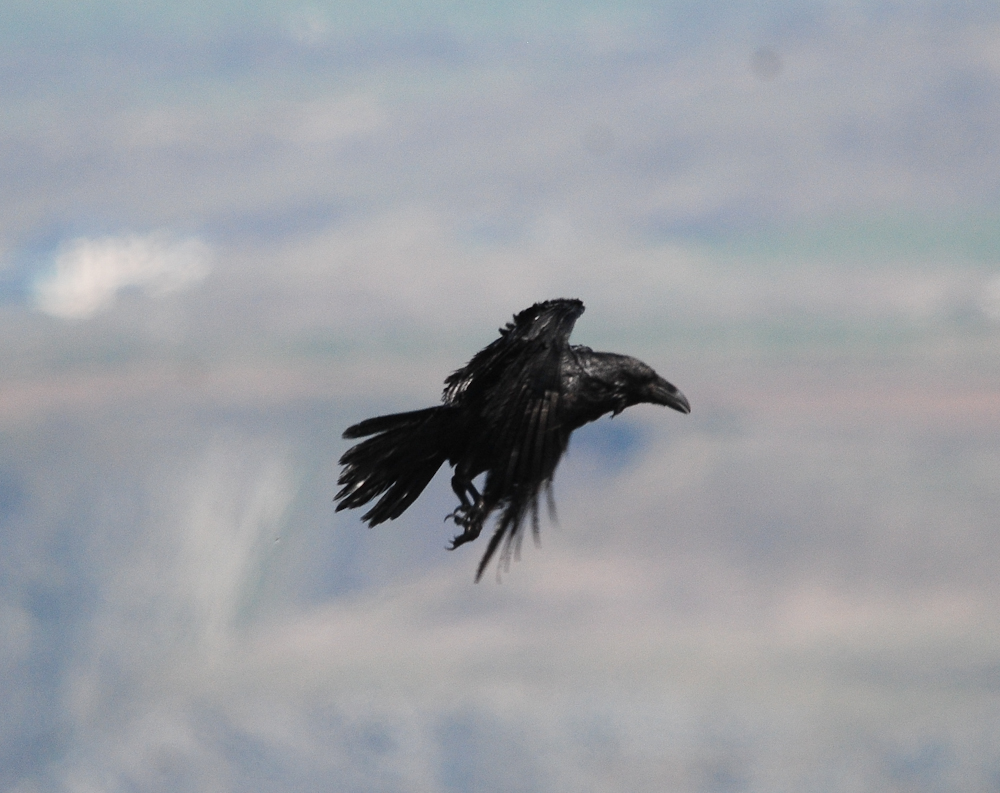
This Raven's nest was in a new position the birds having moved after a previously unsuccessful breeding attempt elsewhere.


The Ravens were a potential threat to the lambs in some circumstances and the first were being born during our tenure. Kathy here helping out with Sarah and Lisa with the first twins.


There were a few migrants too, though nothing very unusual but it was quite early in the year.

Common Sandpiper

White Wagtail
 The tide just piles through Ramsey Sound, which is one reason an experimental Tidal Turbine has been installed on the seabed here. The famous string of rocks called 'The Bitches' hold up the tide creating a kind of marine waterfall which kayakers love to test themselves against. Not always successfully as we saw.


We spent some time making and installing nestboxes for the increasing population of  Manx Shearwaters and there were other breeding species all around including Guillemots around the cliffs.


And my particular favourites the Little Owls, this pair had a nest in a wall just near The Bungalow so we could hear them in the evenings and see them most days. Even when they wanted to play hide 'n seek.

The first Short-eared Owl appeared but was seen only occasionally though I believe they were later confirmed as breeding. Hope so.


This sole male Lapwing was the only sign remaining of the breeding population. The last one in Pembrokeshire?


We were really concerned to find this Grey Seal wrapped up in a piece of cloth one morning but we needn't have worried, it was having a great time and played all sorts of games with it for hours.


 And another breeding resident with more of the everyday sights we lived with while we were having a brilliant time. Couldn't recommend it enough!

Wren

Sunrise over St Davids Head (God's own country)

And finally the Bishop Light as the sun goes down.

25 May 2016

Galera and Spanish Lynx in the Sierra Morena

We spent three months in Spain, through the winter from the end of November to the end of February. One of the best things was seeing the wintering birds, many of which could have come straight from Wales. Hen Harrier, Merlin, Meadow Pipit, Linnet even maybe Dartford Warbler though not Blue Rock Thrush; all of which winter here. We thought we'd found a wintering Subalpine Warbler when we came upon a sylvia Warbler right up in the trees but no it was a Dartford and this turned out to be a commonplace, like the one below picking at old fruit. It was a bit surreal.


Couldn't resist this Rock Bunting, even though they are one of the commonest birds around the village.

The highlight of birding around Galera was finding our Trumpeter Finches are still here and looking well settled in at the Water Tower. Hopefully another successful breeding season to come.


One of the things we definitely wanted to do this winter was get off to Andujar for a couple of days looking for Spanish Lynx. We failed in the summer but January is supposed to be the best time to look for them and so we went. The first day was cold and drew a blank but we did get superb views of Black Vultures. This is an excellent site for them.


The Fighting Bulls were much in evidence and the granite carved Commedores for food.


Being mainly an area of hunting estates Fallow Deer (as here) and Red Deer are common, as are Mouflon and Wild Boar. We found four or five Wild Boar and maybe a dozen stripy piglets right in the village when we arrived late back in Galera from the airport. You don't have to go as far as the Sierra Morena looking for them.


Azure-winged Magpies are incredibly common around Andujar, even feeding around the edge of town.


Pretty much everywhere but Griffon Vultures are still impressive.


As are Hoopoes.


And then it appeared, a crap picture because I was just too excited. What a brilliant, arrogant beast; stalking around, sitting a while and continuing on its way. Absolutely amazing. What a beast!


So of course the trip was  a success but we'll still be back next year I think.

06 November 2015

St Agnes 26th September - 17th October

Our annual trip to St Agnes started a bit early this year and in some ways a bit late. We were there before almost all the usual crew but after some really good birds. A Blackpoll Warbler and Grey-cheeked Thrush had been and gone, both, at one time, in the same bush in Santa Warna's Cove (the same spot as the Reed Warbler in the photo here). The Red-eyed Vireo that appeared at the same time was still around and showing well from time to time over the next few days - a cracking bird, one of the two highlights of our visit.


We found a Wryneck in this early period in the gorse and bracken at the south end of Gugh and then saw another found by Will Wagstaff at Kit's Hill at the north end. September is a good month for Reed Warblers and there were usually a few in the good corners.


Always a good feeling being the first people across the Gugh Bar when the tide drops. It's a dramatic place in all conditions.


Smugglers Cottage was a good centre as always and a Water Rail crossing the lawn was a nice garden tick and there was a Firecrest a bit later. This Pied Flycatcher fed in the field next door, strangely preferring the furrows to the surrounding Elms.


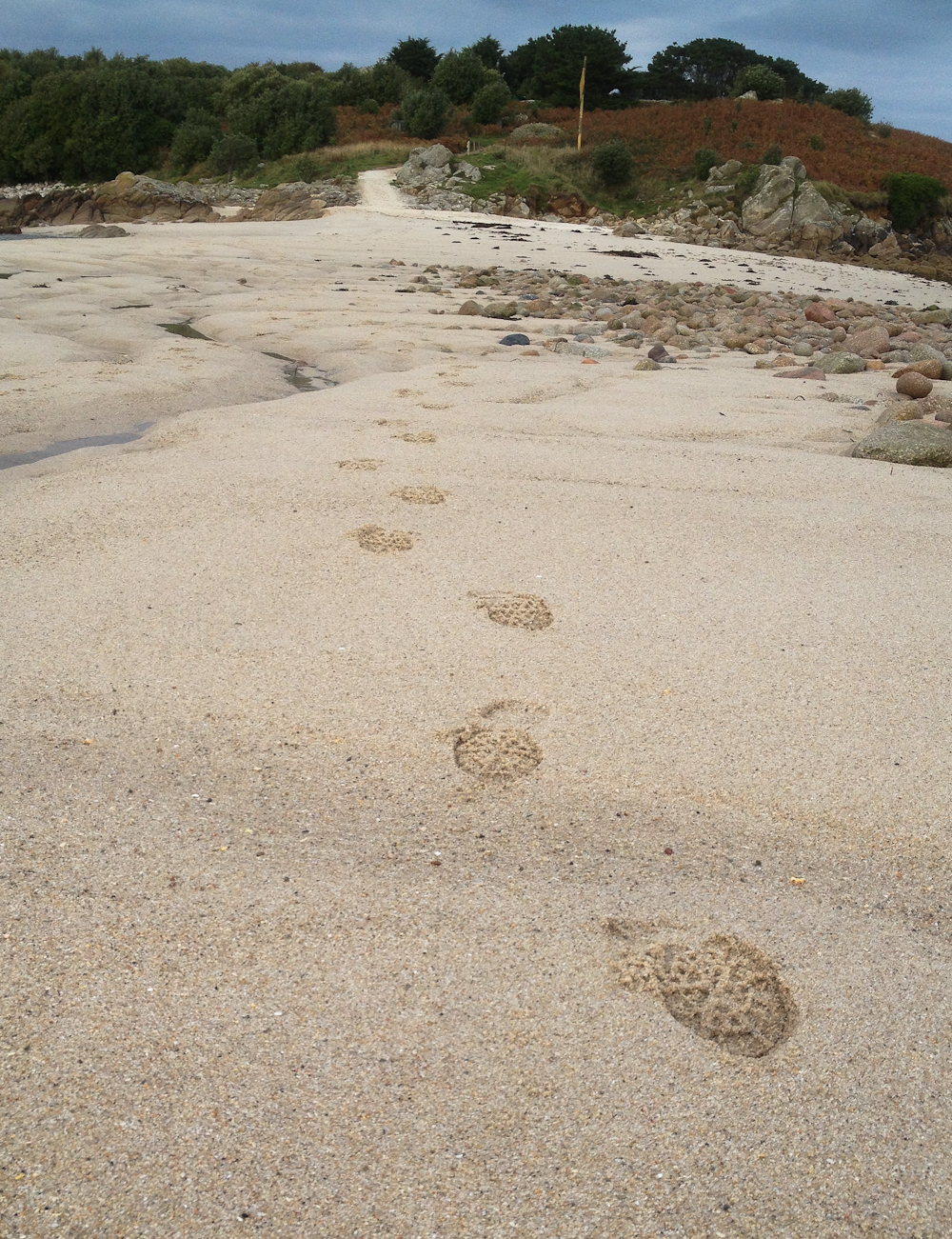
Yellow-browed Warblers arrived in force, then disappeared again for a while and Firecrest numbers picked up well. The first Jack Snipe appeared at the Big Pool and one or two were present daily with just the odd Common Snipe thereafter. A Jack Snipe flushed from the Little Pool drain left the following signs of its presence.


The two Pauls (Heaton and Wright) and Kathy weren't examining the prints they were checking out the ultra-rare Least Adder's-tongue Fern in flower on the edge of Wingletang.


The first Black Redstarts arrived on Periglis just as the RAF Helicopter Rescue service said its farewells to active service.


A flyover Little Bunting caused some excitement and even better when Neil turned this one up in the Island Fields at Browarth where it showed well at times.

Photo Neil Wright


There few rare birds in the middle of the holiday but there was a rare butterfly, or at least a rare form of butterfly. A mall Copper of the form 'schmitti', which caused a Butterfly twitch.


The second major highlight of the trip, found by Doug Page at Covean was this really obliging and well-watched Red-flanked Bluetail. At least well-watched when the local Robins would leave it alone.


Photo Neil Wright
This juv Red-backed Shrike was good value for all the birders, it's in the talons of this Merlin, presumably good calorific value also.


This Hen Harrier (a juv male?) spent half a day shooting around St Agnes and the Western Isles, it appeared to show a marked hooded effect in some photos and there was lots of examination of images of Northern Harrier but it remained just a Hen Harrier.


There were three Siberian Chiffchaffs present later on, one at Troytown and two at Lower Town. The latter, in particular, showed well and gave opportunities for comparing them with 'collybita' birds. As usual, they didn't call but I now subscribe to the philosophy that if it looks like a Sibe - it's a Sibe.


Photo Neil Wright
Photo Neil Wright
And then it was time to go till next year when we hope to spend a month on the Island. Can't wait!